
What Every Small Business Website Needs Before Launch
May 25, 2026
How Much Does a Website Cost in Dubai? (2026 Pricing Guide)
July 5, 2026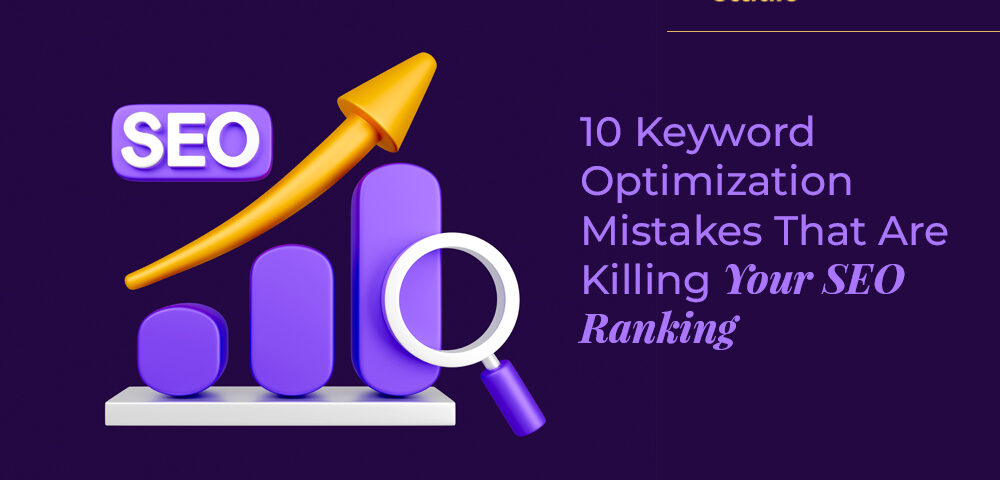
Content is a given that most owners of websites invest a lot in it. They write, publish and wait. However, traffic never arrives. It's sometimes not the content itself, it's the keywords. Many people are not aware that they're committing bad keyword practices that are quietly destroying their rankings. Whether it's too many keywords on a single page or not providing any consideration to the search intent, the little things can pile up quickly. If something worked in 2015, it doesn't help you now, Google has become smarter throughout the years.
This article discusses 10 keyword optimization blunders that are actually hurting your site. They're all common, they're all fixable, and fixing them can have a real impact on your pages' ranking. These tips are relevant to any blog, ecommerce site, or business website.
1. Stuffing Keywords Into Every Sentence
This is the absolute, irrefutable wrongdoing in SEO. People think that the more keywords, the higher rank. Therefore, they say the same thing over and over again until they sound unnatural.
Google doesn't like this. It penalizes it. Keyword stuffing makes your text difficult to read and tells the search engines that you're trying to trick them and not assist users.
The ideal keyword density is approximately 1–2%. Make sure to incorporate your main keyword in a natural manner. Say it where it will fit and then move on. Your content needs to sound like a human, not a robot.
2. Targeting Keywords With No Search Volume
There are people who write for weeks on a keyword, without anyone really using it. They don't do their research and take a guess at what sounds right to them.
This just isn't worth anyone's time. If there are no monthly search volumes for a keyword, then there's no point in being ranked for it. If you hit position one, you will receive no traffic!
Before you write, make sure to review the search volume. Utilize tools such as Google Keyword Planner, Ahrefs, or Ubersuggest. Search for keywords that have actual demand. A small amount of traffic, say 200-500 searches per month, can still lead to regular traffic if the intent is aligned with your content.
3. Ignoring Search Intent Completely
There's a way to rank for a keyword that can still lose. How? By not knowing what the person searching that keyword is looking for.
Search intent is the intent of the user behind the search. A user that types in the word "best running shoes" is asking for a list and a comparison. A person entering the query "buy Nike Air Max" wants a product page. When the goal is to create a product page, but you create a blog post, Google will not rank you well, as this is not what users are expecting.
When creating any type of content, the question to ask yourself is what is the person searching this keyword looking for? That's a great boost to your ranking odds.
4. Using Only One Keyword Per Page
Some content creators choose one target keyword and make the page exist for that one keyword. They forgo dozens of related terms which can generate more traffic.
Each page should target multiple keywords as this will provide more value to the user. These words are known as semantic keywords or LSI (Latent Semantic Indexing) keywords. They are synonymous, related, and variant words that can fit in your content naturally.
For instance, a page with the title of "email marketing tips" should also feature keywords such as "email campaigns", "open rates" and "subscriber list". There's no need to push them in, they will just come out if they write extensively on a topic.
5. Placing Keywords in the Wrong Spots
The placement of your keyword is as important as the number of times you use it. Many people use keywords throughout their content, but fail to include them where they are most significant.
The most critical areas where your main keyword will be placed are:
- The page title (H1)
- The initial 100 words of your text.
- One or more subheadings (H2 or H3)
- Meta title and meta description.
- The URL slug
- Image alt text
If your keyword is in paragraph 6 and not mentioned in the title or meta description, then Google has less of an incentive to link that page to that particular keyword.
6. Targeting Keywords That Are Too Competitive
It is an uphill struggle to try to rank for high competition keywords on a new or small website. There are huge brands with thousands of links competing for the terms digital marketing or best credit cards. Good keyword research can help you identify lower competition alternatives where you actually have a chance to rank. The fight in which you are going to beat them, you won't do that without serious authority.
This is where long tail keywords are useful. Longer, more specific phrases that are less competitive and with more intent. The person who typed in 'how to start email marketing for small businesses' is more likely to be interested in your content than the person who typed in 'email marketing' and it's easier to rank for.
Long-tail keywords should be targeted first, particularly at new sites. First create authority, get backlinks and then attack more competitive keywords later down the road.
7. Forgetting to Optimize for Local Keywords
For businesses with location elements, not targeting local keywords is a waste of money. Local SEO is among the best methods to get customers that are ready to buy.
A business like a digital marketing agency Fort Lauderdale should be targeting phrases that include the city name, neighborhood references, and service-specific terms tied to the location. Without local keyword optimization, your site will not show up when someone nearby searches for exactly what you offer.
Use city and region in title tags, meta descriptions, service pages and even blog posts, if applicable. Set up a Google Business Profile and maintain it. Local keyword optimization is not a difficult thing to do, but a lot of businesses do not bother doing it.
8. Cannibalizing Your Own Keywords
When two or more pages on your site are optimized for the same keyword, it is known as keyword cannibalization. This can make it hard for search engines to understand. They don't know on which page they should rank and rank it either not well or they change their pages repeatedly, which means you get different results.
It's more prevalent than you might think. There could be a blog post, service page, and landing page on a website all optimized for "SEO services for small businesses." Now it's a race between these three pages.
What needs to be done is conducting an audit of your content and streamlining it. Choose one page as the focus page on which to target each keyword. Combine or route others. This concentrates on 1 page and provides that page a much better chance at ranking.
9. Not Updating Old Content With Better Keywords
The oldest pages may be based on a strategy for outdated keywords. The words you utilized 3 years ago may not be the ones individuals are using to look for these days. Search language changes. New terms emerge. Old ones die out.
Do a regular content audit. Look for impressions on Google Search Console without many clicks on specific pages. These pages will frequently list in reference to a keyword, but not quite what you are looking for.
Refresh the content and add more relevant, fresh keywords. With a little tweaking of the title and a few changes to the body text, a page can be resurrected.
10. Relying on Keyword Tools Alone Without Checking Real SERPs
Use keyword tools to get data. It is important to remember, however, that data doesn't tell the whole picture. A lot of people simply choose keywords based on the number/count, volume, difficulty score, CPC without even finding out if there's anything ranking for that word.
You can learn a lot when you view the actual search results page for a keyword. You can observe which type of content is ranking (blog posts, product pages or videos). You can see the length and detail of the top results. You find out what they are the subtopics of. If there are a lot of paid ads at the top, which are displacing organic search results, you will know it.
This context can help you determine whether or not a keyword is worth pursuing and what type of content you should produce. Never agree to a keyword that they haven't personally checked using their own browser.
Final Thoughts
The optimization of keywords is not a trick. It's about knowing what people want to know and providing them with a page that actually addresses that query. These are the types of errors that are often made, created because they are simple to make, particularly if you aren't guided, or if you don't have a systematic SEO process in place.
Address the ones that pertain to your site. Get the quick wins certified first, update keyword position, look for cannibalization and optimize content around search intent. These are not expensive tools or months of work that you have to dedicate to the task. They need to be tended and maintained.
If you get the fundamentals right, then your rankings will follow suit.